
Portfolio
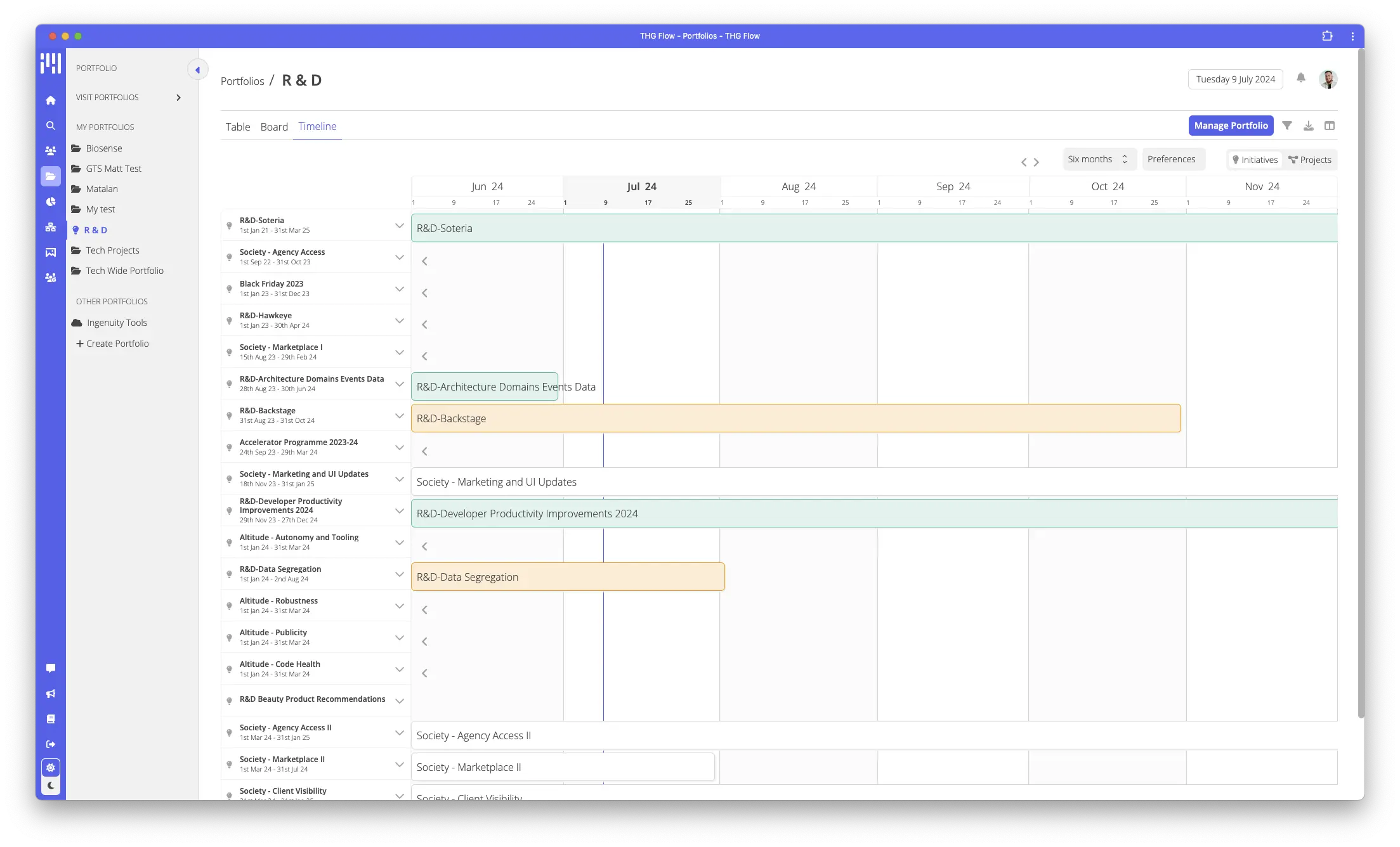
A portfolio can be created to monitor a collection of initiatives and projects. Portfolios allow a cross organisational and cross divisional view of the status and health of a list of projects and initiatives.
Anyone in the organisation can create a portfolio over any projects or initiatives they care about.
When creating a portfolio, you can search manually for projects or initiatives or you can bring in projects from your team. If you are a division admin, you’ll be able to create a portfolio of all projects within all teams within your division.
The portfolio currently supports three views, Table, Board and Timeline
Exports
It’s possible to create a PDF export of a portfolio, this can be useful for offline meetings / reporting project or initiative changes when not all the users use Flow.
You can create a report for projects or initiatives. For now, the report covers details of health status and timelines.
Collaboration
By default, you own a portfolio as a user, think of this as a “view” of multiple projects that may be related in some way. In some cases, you may want to share this with other people in the organisation, they can be given the following permissions.
| Role | Description |
| Owner | Allowed full control of the portfolio, can add projects / initiatives |
| Collaborator | Has visibility of what’s inside the portfolio but cannot make changes |
Permission / escalation
Projects in Flow are owned at the organisation level meaning that every user within your organisation can see some details about the project, they include
- Name
- Coordinator
- Dates
- Status
- Health
Projects that are marked as “private” are excluded from portfolio and search results unless your user account has permission granted.
Further details such as tasks and metadata from a project are hidden until you are given access to it by an admin of that project adding your team to it.
Viewing a portfolio doesn’t grant any extra permissions then your user would ordinarily have so some people may have a smaller set of information available to them.